Board Game Bag Manufacturing: Material, Padding, and Load-Testing Standards That Prevent Freight Damage
Board Game Bag Manufacturing: Material, Padding, and Load-Testing Standards That Prevent Freight Damage
Sourcing custom carrying bags and backpacks for a tabletop game line or retail store isn't as simple as picking heavy fabric and cool color options off a factory catalog. Having worked with dozens of board game publishers and accessory brands over the years, I've seen way too many buyers learn this the hard way—usually after unboxing a container of bags with busted zippers, ripped shoulder straps, or crushed game boxes. In the gaming accessory business, the margin between a bag that earns glowing reviews and one that triggers refund requests comes down to factory-level material specs and real-world load testing.
Protection begins with raw fabric selection and weather resistance. While basic polyester looks acceptable in studio photos, it won't protect games during rainy commutes to game nights or conventions. In our production facility, we recommend 600D to 1680D Oxford fabric with a heavy PU or PVC backing coating. Higher denier ratings offer superior tear resistance against sharp box corners, while the internal coating creates a reliable water-resistant barrier. Skipping proper fabric coating practically invites water damage when gamers transport heavy games in bad weather.
Moving inside the bag, padding density and lining quality determine impact resistance. Board game boxes are made of paperboard, meaning a single drop on a concrete sidewalk can permanently dent collectible game covers. Low-density foam collapses under the weight of three or four heavy games, leaving zero shock absorption. Layering 10mm to 15mm high-density EVA or EPE foam inside smooth 210D polyester lining absorbs drops, prevents internal friction, and holds the bag's rigid structure even when completely empty.
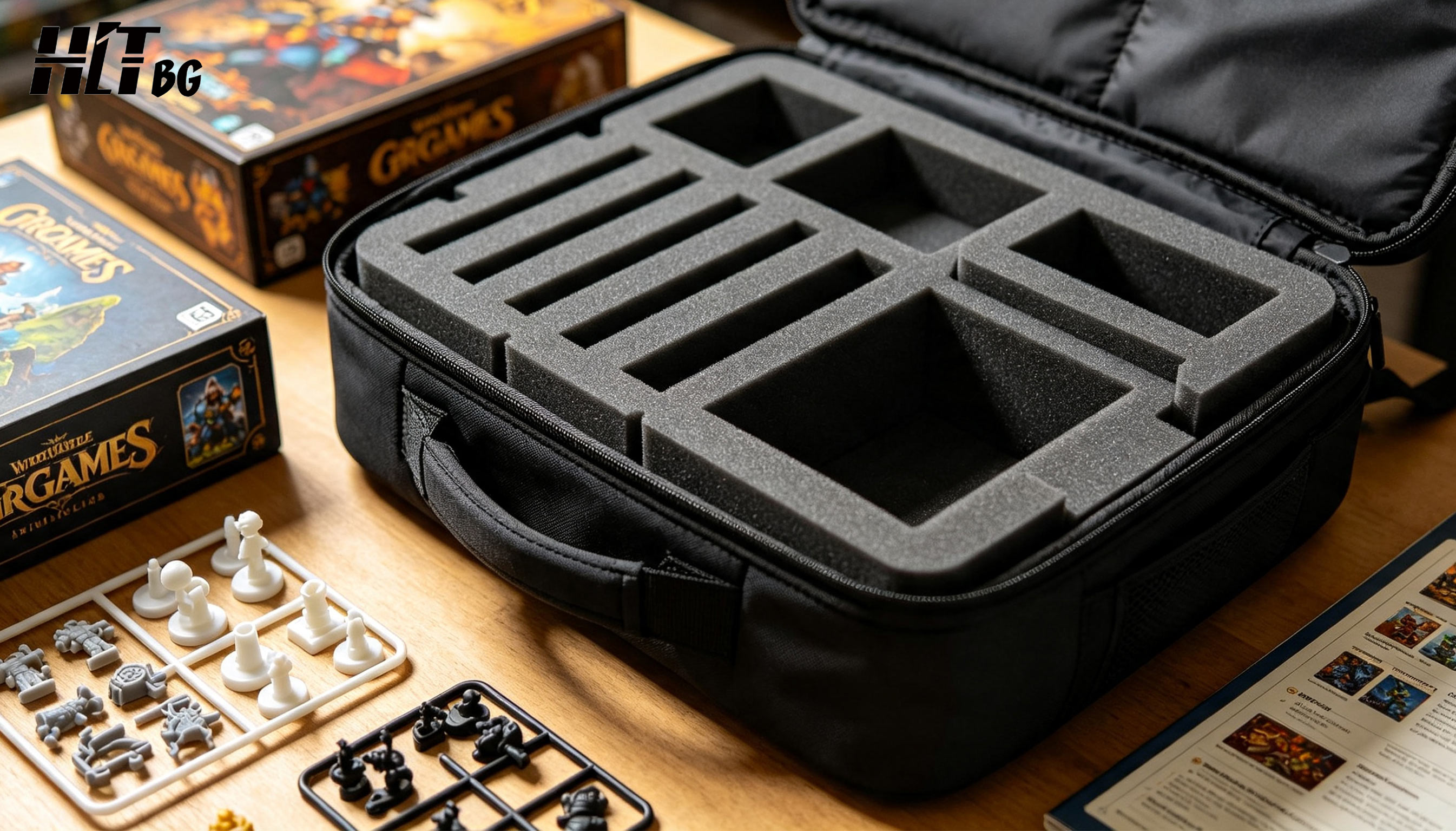
Stitching strength and zipper specifications directly dictate long-term durability. Heavy game collections—like big box games or campaign games—can easily weigh 10 to 15 kilograms per bag, placing extreme stress on handles, shoulder straps, and zippers. Standard apparel stitching will snap on the first trip, making cross-stitching and heavy bar-tacking essential on all main stress points. Furthermore, specifying heavy-duty #8 or #10 dual zippers with smooth nylon teeth ensures players can zip full bags tight without teeth bursting or sliders jamming under tension.
Factory quality control requires physical stress testing before any shipment leaves the warehouse. A practical QC protocol includes static load tests to check seam stretch under 20 kilograms, strap jerk tests to simulate walking impact, and zipper cycle testing under full capacity. Verifying seam strength, thread tension, and clean interior finishing ensures that every bag arrives at your shop ready to perform in real-world conditions.
If you're tired of handling customer complaints about broken bag zippers or torn straps and want to build a premium gaming bag line that gamers trust, let's talk. Send our manufacturing engineering team a message today—we're happy to review your tech packs, mail out material swatches, or build custom OEM samples for your shop to test out.

How to Pick a Board Game Bag That Actually Protects Your Game
Board Game Storage Bags: Materials & Styles for EU & US Wholesale Distributors
Related Article